
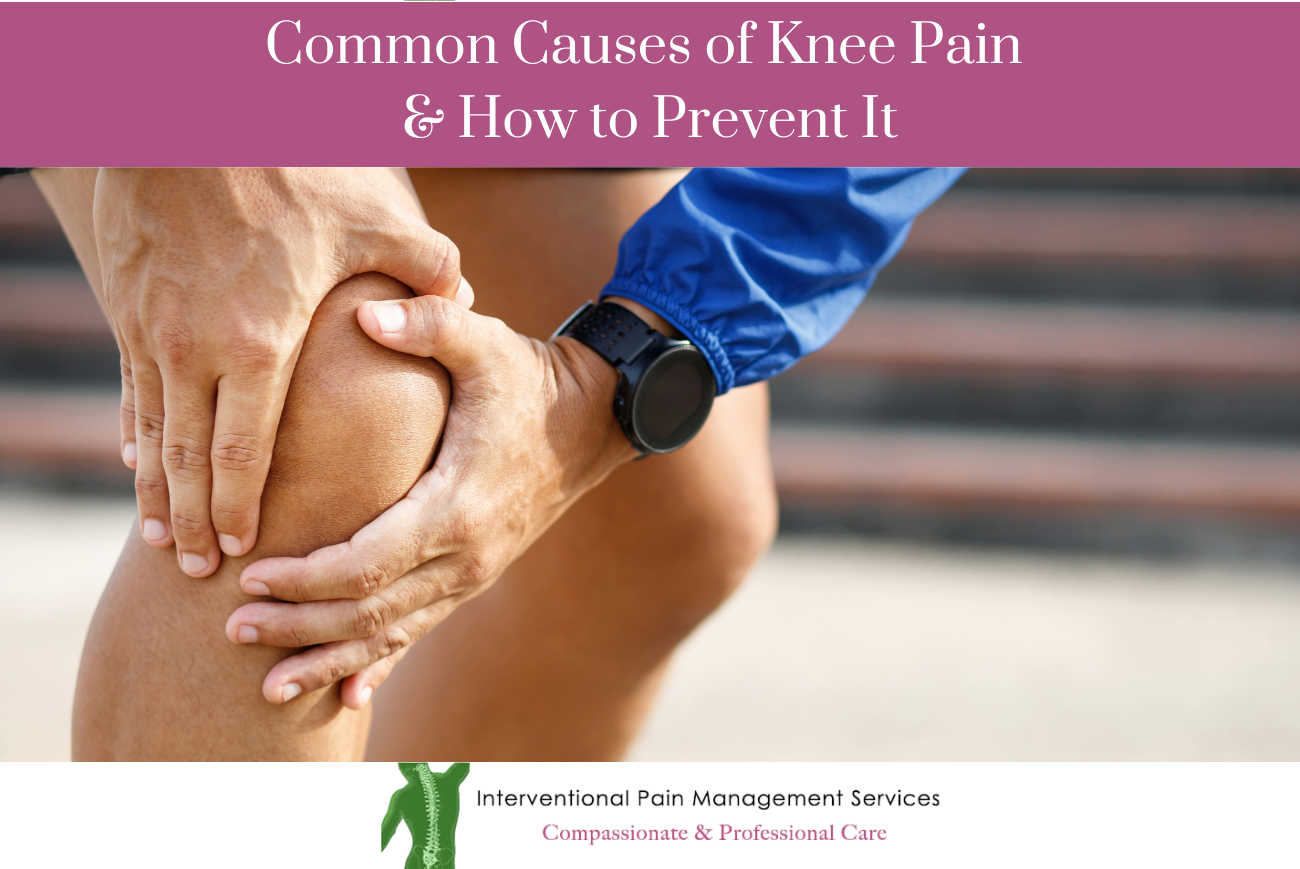
 Knee pain is a common complaint affecting people of all ages, often limiting mobility and quality of life. At Interventional Pain Management Services, we specialize in diagnosing and treating knee pain to help patients regain comfort and functionality. This blog explores the common causes of knee pain and provides practical prevention strategies to keep your knees healthy.
Common Causes of Knee Pain
- Osteoarthritis
Osteoarthritis is the most common form of arthritis in the knee. It occurs when the cartilage that cushions the bones in the joint deteriorates, leading to pain, swelling, and stiffness. - Patellar Tendonitis
Often referred to as “jumper’s knee,” this condition involves inflammation of the patellar tendon, which connects the kneecap to the shinbone. It’s commonly seen in athletes. - Meniscus Tears
The meniscus acts as a shock absorber in the knee. Tears in this cartilage are common during sports activities or due to age-related degeneration. - Ligament Injuries
Injuries to the ACL (anterior cruciate ligament), MCL (medial collateral ligament), or other ligaments in the knee can result in pain and instability. These injuries often occur during high-impact activities or sudden twisting motions. - Bursitis
The bursae are small sacs of fluid that reduce friction in the knee joint. Overuse or trauma can cause inflammation, leading to pain and swelling. - Gout
Gout is a type of arthritis caused by the buildup of uric acid crystals in the knee joint, leading to sudden and severe pain.
How to Prevent Knee Pain
- Maintain a Healthy Weight
Excess weight puts additional stress on your knees, increasing the risk of osteoarthritis and other degenerative conditions. - Strengthen Surrounding Muscles
Strong thigh and leg muscles, including the quadriceps and hamstrings, provide support to the knee joint. Regular exercise can help build muscle strength. - Practice Proper Exercise Techniques
Avoid overextending or twisting your knee during physical activities. Engage in warm-ups and stretches before exercise to improve flexibility and reduce the risk of injury. - Wear Proper Footwear
Choose supportive shoes that align your legs and provide cushioning to reduce stress on the knees. - Avoid Repetitive Strain
Repetitive movements, such as prolonged kneeling or squatting, can lead to overuse injuries. Take breaks and adjust your position to avoid strain. - Seek Early Intervention for Pain
If you experience knee pain, seek medical attention promptly to prevent worsening of the condition. Early diagnosis and treatment can help manage symptoms effectively.
How We Can Help
At Interventional Pain Management Services, we offer advanced diagnostic and treatment options tailored to your needs. Our comprehensive approach includes:
- Minimally Invasive Procedures: Steroid injections, platelet-rich plasma (PRP) therapy, and hyaluronic acid injections.
- Physical Therapy Referrals: Strengthen muscles and improve joint mobility.
- Medication Management: Personalized plans to manage pain effectively.
- Surgical Consultation: If necessary, we can refer you to trusted orthopedic specialists for further intervention.
Q&A Section
Q: When should I see a doctor for knee pain?
A: You should consult a doctor if your knee pain persists for more than a few days, is accompanied by swelling, or interferes with your daily activities. Severe pain after an injury should also be evaluated immediately.
Q: What are the non-surgical treatment options for knee pain?
A: Non-surgical treatments include physical therapy, medications, lifestyle changes, and interventional techniques like corticosteroid or PRP injections.
Q: Can exercise worsen knee pain?
A: High-impact activities may aggravate pain, but low-impact exercises like swimming, walking, or cycling can strengthen the joint and alleviate discomfort.
Q: Are knee braces effective in preventing knee pain?
A: Knee braces can provide support and reduce strain during activities. However, they should be used under a healthcare provider’s guidance.
Q: How can I prevent knee pain while running?
A: Wear proper footwear, practice good form, and avoid overtraining. Strengthening exercises and stretching can also help.
Contact Information
If you’re experiencing knee pain, don’t wait—contact Interventional Pain Management Services today for expert care:
Interventional Pain Management Services
📍 Address: 261 Dunn Road St. Louis, MO 63031
📞 Phone: (314) 830-2600
Your journey to pain relief starts with a call. Let us help you reclaim your mobility and quality of life!